Life will always bring challenges. Stress, setbacks, disappointments, and unexpected changes are part of being human. Emotional resilience is what helps you navigate those moments without losing yourself in them.
Resilience is not about avoiding struggle. It’s about learning how to respond, adapt, and grow through it.
What Is Emotional Resilience?
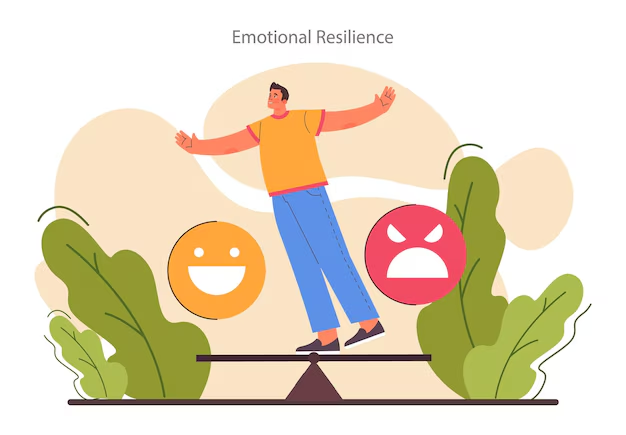
Emotional resilience is the ability to cope with stress, recover from difficulties, and maintain balance during tough times.
It does not mean:- You never feel overwhelmed
- You don’t experience sadness or anxiety
- You always stay positive
It means you can move through difficult emotions without being consumed by them.
Why Emotional Resilience Matters
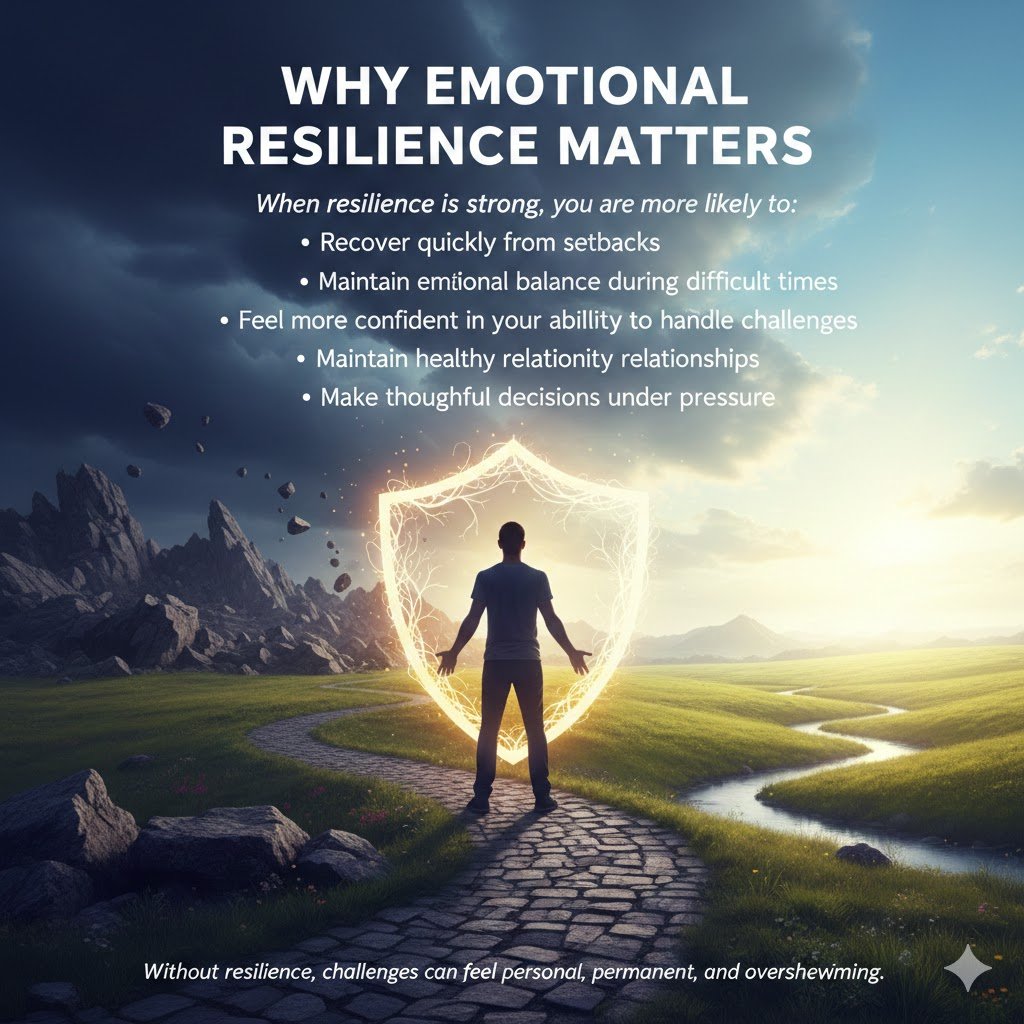
When resilience is strong, you are more likely to:
- Recover quickly from setbacks
- Manage stress effectively
- Maintain emotional balance during difficult times
- Feel more confident in your ability to handle challenges
- Maintain healthy relationships
- Recover more quickly from disappointments
- Make thoughtful decisions under pressure
Without resilience, challenges can feel personal, permanent, and overwhelming.
Signs You May Need to Strengthen Resilience
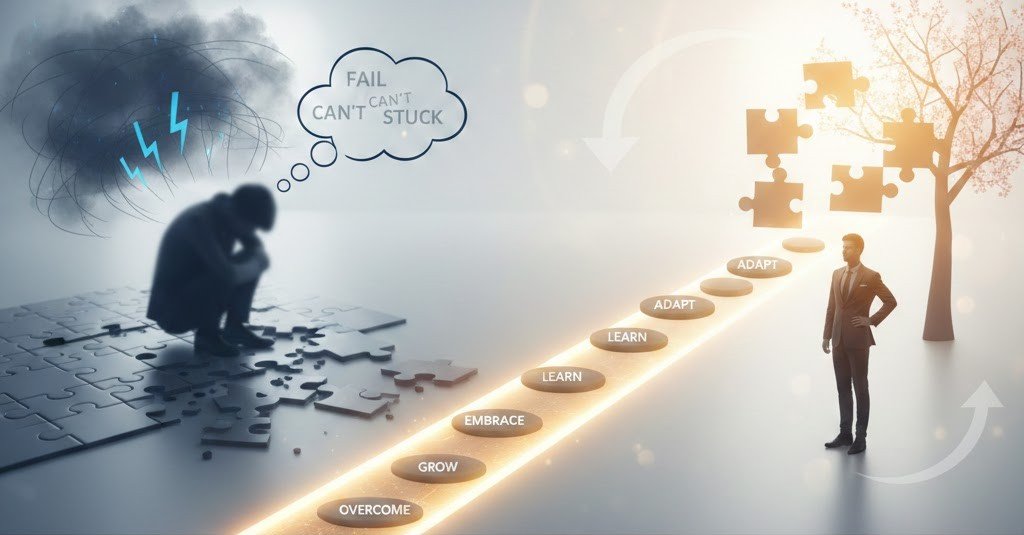
You might notice:
- Difficulty bouncing back after setbacks
- Intense emotional reactions to small stressors
- Persistent self-doubt
- Avoiding challenges due to fear of failure
- Feeling “stuck” after disappointment
The good news is that resilience is not a personality trait — it’s a skill that can be developed.
How to Build Emotional Resilience
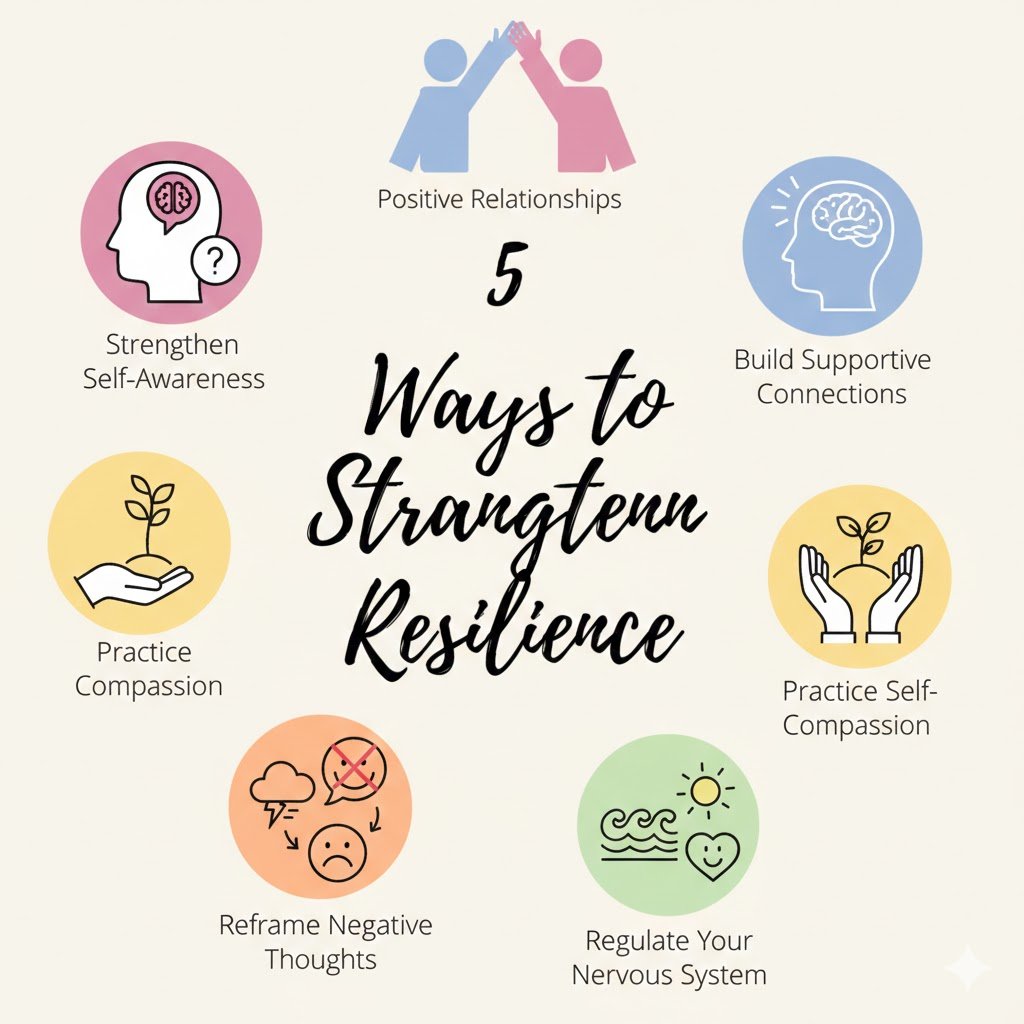
- Strengthen Self-Awareness
Understanding your emotional triggers helps you respond rather than react. - Regulate Your Nervous System
Practice mindfulness, deep breathing, or other calming techniques to manage stress and emotional reactions. - Reframe Negative Thoughts
Challenge negative self-talk and replace it with more balanced, realistic perspectives. - Build Supportive Connections
Having a strong support system helps you navigate challenges more effectively. Seek out people who uplift and encourage you. - Practice Self-Compassion
Be kind to yourself during difficult times.
When Professional Support Can Help
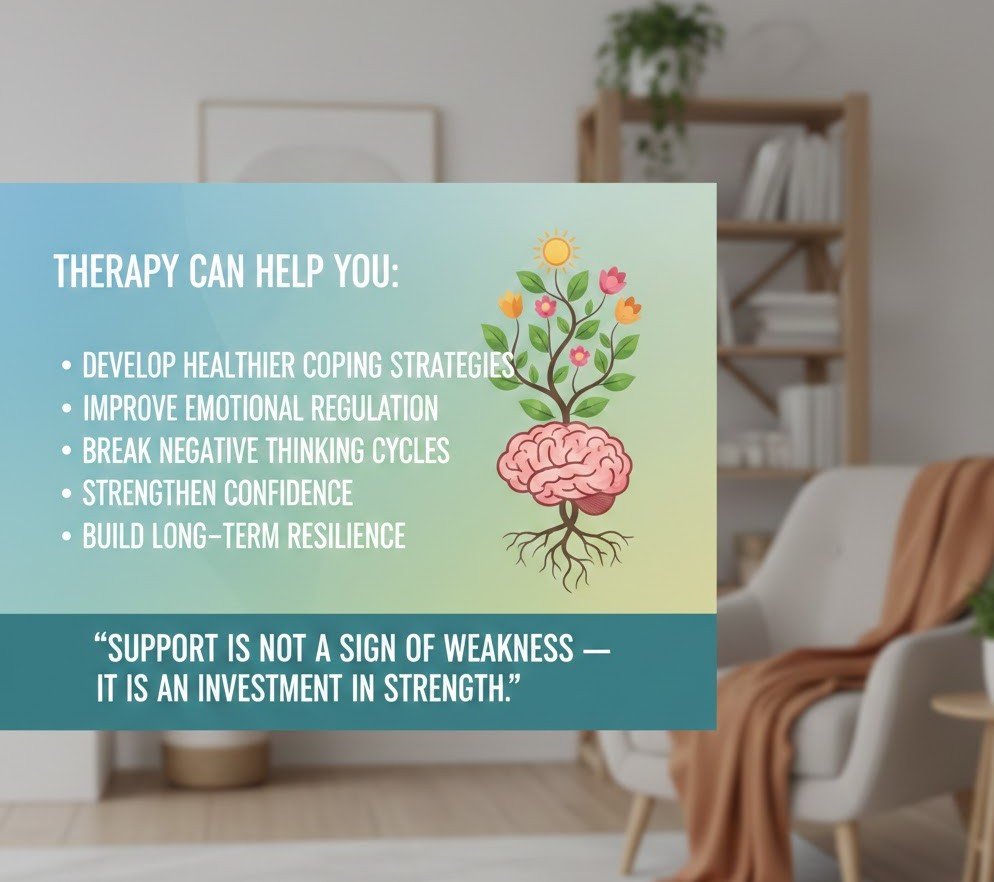
If you feel overwhelmed by stress or stuck in unhealthy patterns, therapy can help you:
- Develop healthier coping strategies
- Improve emotional regulation
- Break negative thinking cycles
- Strengthen confidence
- Build long-term resilience
- Receive validation and support
Support is not a sign of weakness — it is an investment in strength.

A Gentle Reminder
You are stronger than your toughest day.
You are capable of growth, even in discomfort.
Resilience is not about being unbreakable — it’s about becoming adaptable.
At Ameera Wellness, we help individuals cultivate emotional resilience so they can navigate life’s challenges with clarity, confidence, and inner strength.